
CB1 receptor
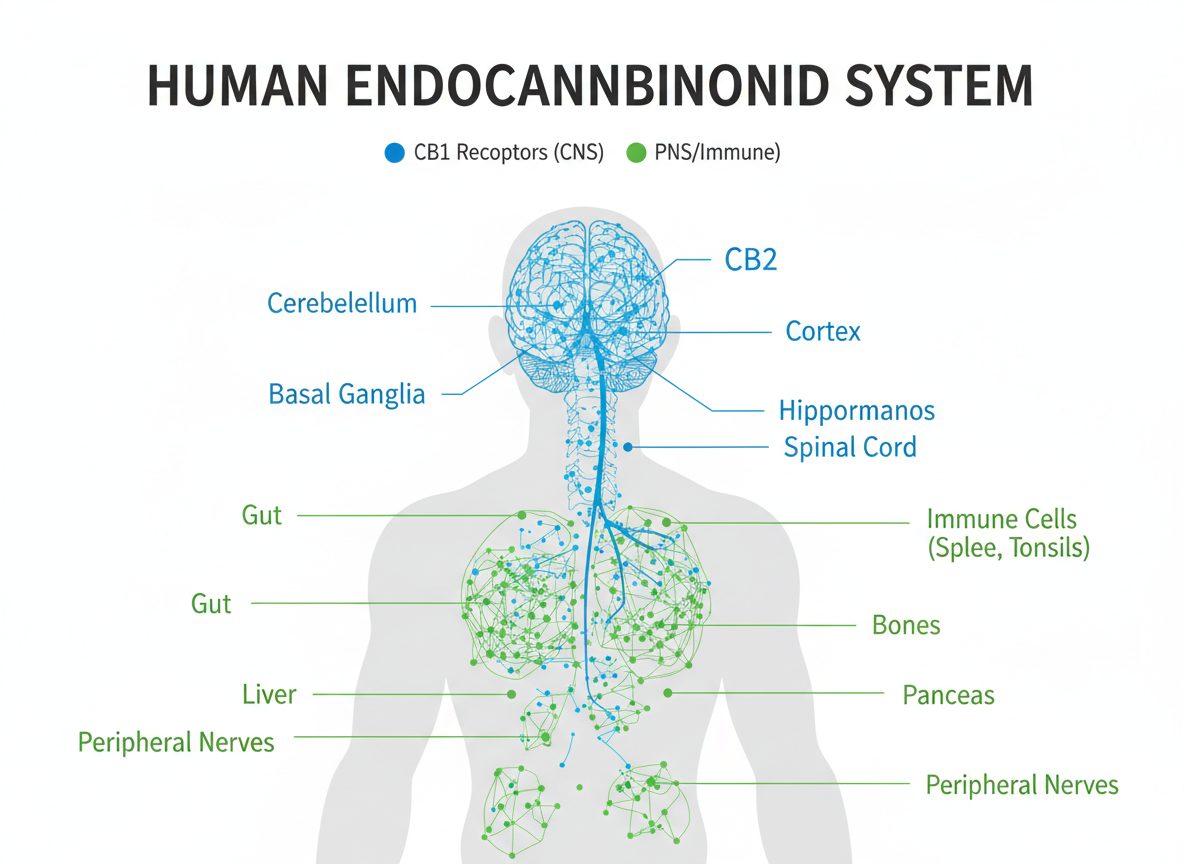
CB1 (gene CNR1, chromosome 6q15) is the most abundant G protein-coupled receptor in the mammalian central nervous system, with especially high density in the basal ganglia, cerebellum, hippocampus, and cortical regions — an anatomical distribution that maps closely onto the motor, mnemonic, and affective effects of Δ⁹-THC. CB1 couples primarily to Gi/o proteins, inhibiting adenylyl cyclase, closing N- and P/Q-type voltage-gated calcium channels, and opening inwardly rectifying potassium channels. Localization is typically presynaptic, where CB1 activation suppresses neurotransmitter release — the molecular basis of retrograde endocannabinoid signaling (Wilson & Nicoll, 2002, Science 296:678). CB1 also exists peripherally, including in adipocytes, hepatocytes, and the GI tract. CB1 antagonism was clinically validated for weight loss by rimonabant, withdrawn in 2008 due to psychiatric adverse effects. → See also: CB2 receptor, THC, Retrograde signaling, Allosteric modulation.