
Cloning
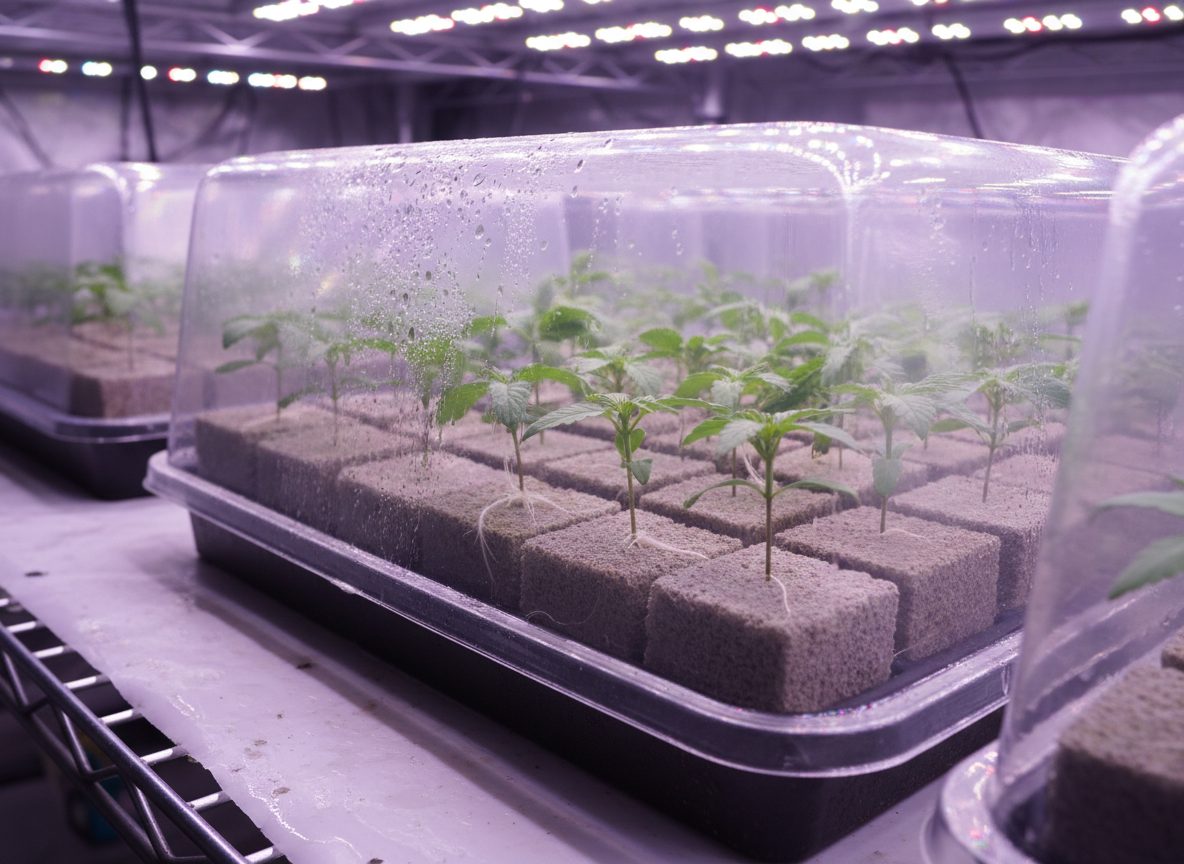
Cloning is the horticultural process of producing genetically identical cannabis plants by vegetative propagation — most commonly via rooted stem cuttings, but also through layering, grafting, or in vitro micropropagation (Caplan et al. 2018; Lubell-Brand et al. 2021). Rooting is driven by endogenous and exogenous auxins, principally indole-3-butyric acid (IBA) and 1-naphthaleneacetic acid (NAA), which stimulate cambial cell division and adventitious root primordium formation at the basal wound (Caplan et al. 2018; Campbell et al. 2021). Under optimized conditions — 22–25 °C rhizosphere, dome humidity, low-intensity blue-enriched light — commercial rooting success exceeds 85% in 7–14 days. Micropropagation on Murashige-Skoog or DKW media supplemented with IBA permits pathogen-free mass clonal production (Page et al. 2021). Etymology: back-formation from clone (Greek klōn). Synonyms: vegetative propagation, asexual propagation, clonal propagation, striking cuttings. → See also: Clone, Cutting, Mother plant.