
Curing
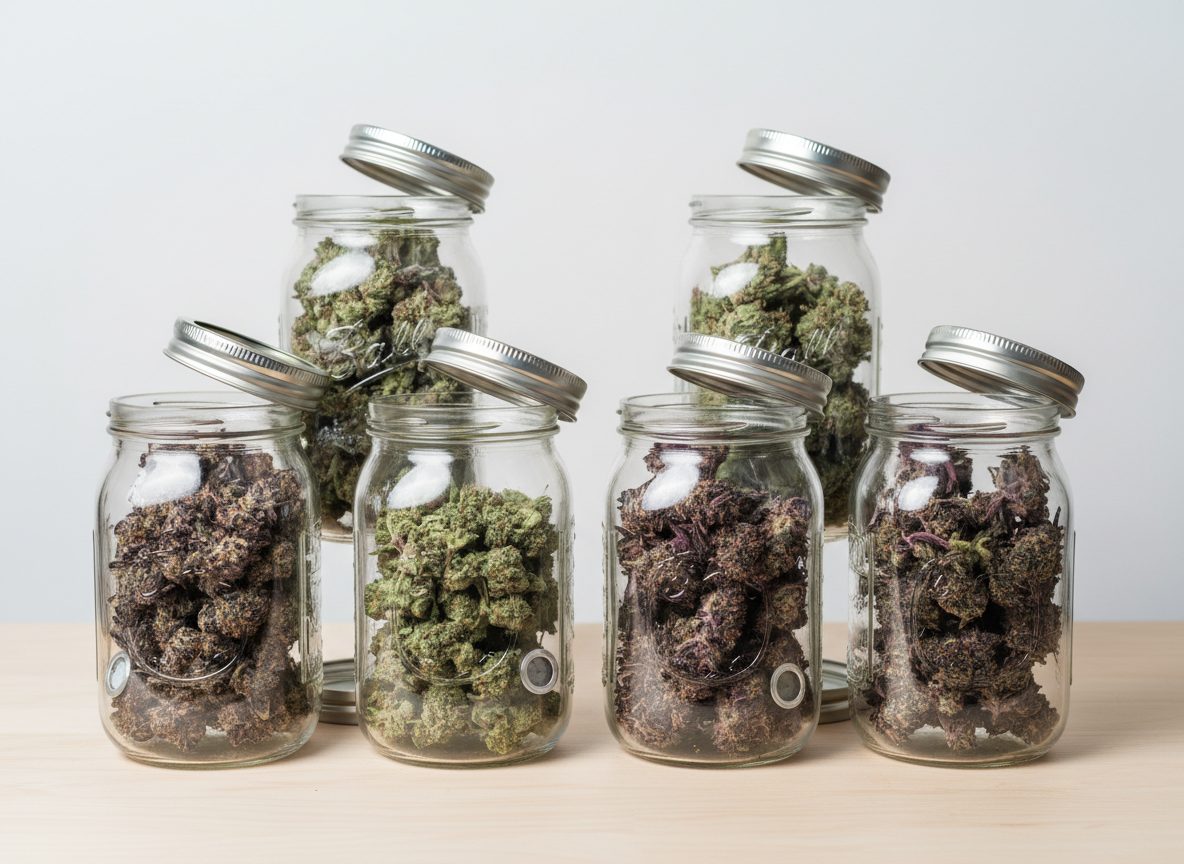
Curing is the post-drying stage of cannabis processing in which nearly-dry inflorescences are sealed in airtight vessels (typically glass mason jars or food-grade HDPE totes) at 60–70 °F (15–21 °C) and maintained at an equilibrium relative humidity of 58–62% RH (water activity a_w ≈ 0.58–0.62) for 2–8 weeks, with periodic "burping" (brief lid removal for gas exchange) during the first 1–2 weeks. Curing biochemistry is multifactorial. Chlorophyll degradation proceeds via residual enzymatic activity (chlorophyllase, Mg-dechelatase, pheophorbide a oxygenase), removing the "grassy/hay" aldehyde-dominated aroma and yielding smoother combustion. Moisture equilibration redistributes water from the dense bud core to the surface, homogenizing a_w, preventing mold, and keeping enzymes hydrated. Terpene preservation is maximized by low temperature and low oxygen exposure — volatile monoterpenes (myrcene, limonene, pinene) evaporate and oxidize readily, and Ross & ElSohly (1996, Journal of Natural Products) documented substantial terpene loss kinetics under improper storage. Residual enzymatic and microbial activity converts starches to simple sugars and degrades chlorophyll and some amino acids, with aerobic bacteria dominating in early, burped stages (ammonia off-gassing indicates anaerobic putrefaction and a failed cure). Monoterpene isomerization and slow non-enzymatic browning further refine aroma, and slow decarboxylation of THCA → THC and CBDA → CBD proceeds at curing temperatures. Aerobic vs. anaerobic considerations: early-cure burping supports obligate-aerobic microflora and releases CO₂, ethylene, and water vapor; long-term sealed storage favors anaerobic stability and maximizes terpene retention, but inadequate pre-jar drying yields anaerobic spoilage. Etymology: Latin cura, "care." Synonyms/slang: jar-curing, burping, aging. → See also: Drying, Harvest, Terpenes, Cannabinoids, Decarboxylation (Chemistry).