
Male plant
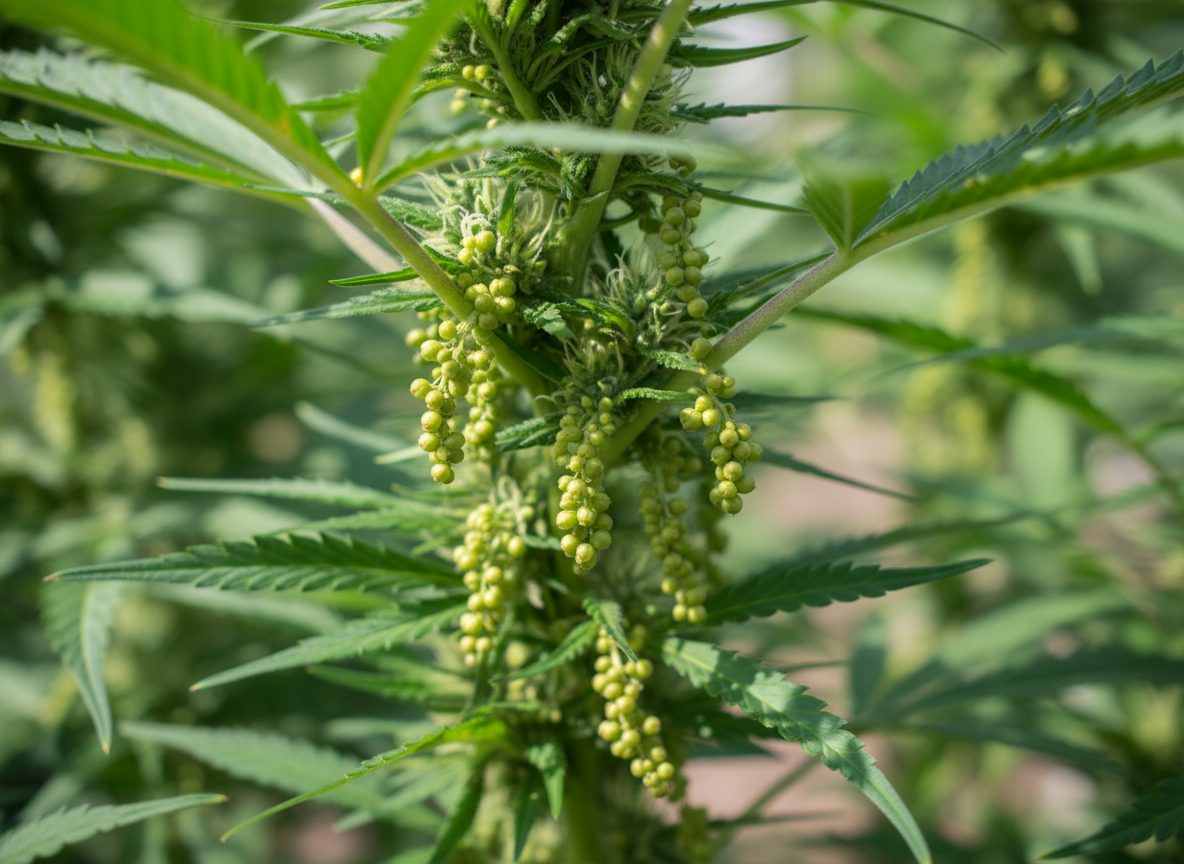
A male (staminate) cannabis plant is a genetically XY individual that produces staminate, pollen-bearing inflorescences and no pistillate flowers in dioecious accessions (Small 2015; Moliterni et al. 2004). Male inflorescences are loose, pendant, axillary cymose panicles (thyrses); each flower bears five greenish-to-whitish tepals and five stamens with flaccid filaments opposite the tepals, abscising after anthesis (Small 2015; Spitzer-Rimon et al. 2019). Males typically mature and senesce 2–4 weeks earlier than females in dioecious populations and are taller and less branched (Small 2017). In drug-type (sinsemilla) cultivation males are identified at pre-flower — typically days 14–21 after flowering initiation, by visible "balls" or pollen sacs at nodes — and culled to prevent pollination; in breeding programs select males are preserved as pollen donors for regular-seed crosses, while in dioecious fiber hemp both sexes are retained, though males produce finer bast fibers. Etymology: Latin masculus ("male"). Synonyms: staminate plant, pollen donor, "pollen chucker," XY plant. → See also: Female plant, Pollination, Regular seeds, Hermaphrodite.