
Hydroponic
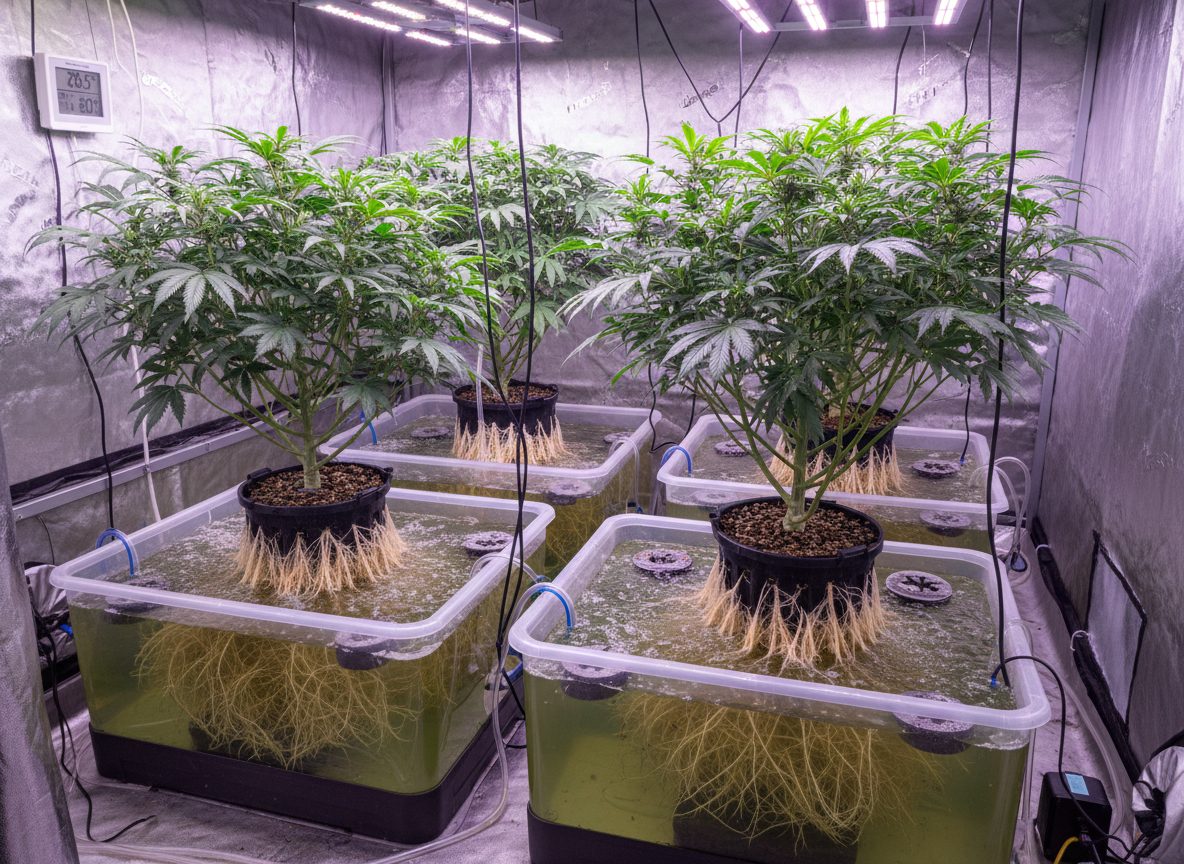
Hydroponic cultivation encompasses any soilless system in which plant roots are supplied with a balanced aqueous nutrient solution, the grower exerting direct control over EC, pH, dissolved oxygen, and ionic composition (Resh 2013, Hydroponic Food Production). Principal configurations used for cannabis include deep water culture (DWC), with roots suspended in continuously aerated reservoirs; nutrient film technique (NFT), a thin film of solution recirculating over root mats in sloped channels; ebb-and-flow/flood-and-drain, with periodic flooding of an inert medium; drip irrigation to rockwool, coco coir, or clay pebbles; and aeroponics. Advantages include rapid growth, precise nutrient control, and high yield per unit area; disadvantages include rapid pathogen spread (Pythium, Fusarium) and zero substrate buffering against fertigation errors (Punja et al. 2019). Caplan et al. (2017a, b) established foundational N-P-K rates for cannabis in coir-based soilless systems. Etymology: Greek hydor ("water") + ponos ("labor"); coined by W. F. Gericke, 1937. Synonyms/slang: hydro, soilless, recirculating. → See also: Aeroponic, Coco coir, Soil, Indoor.