
Pollination
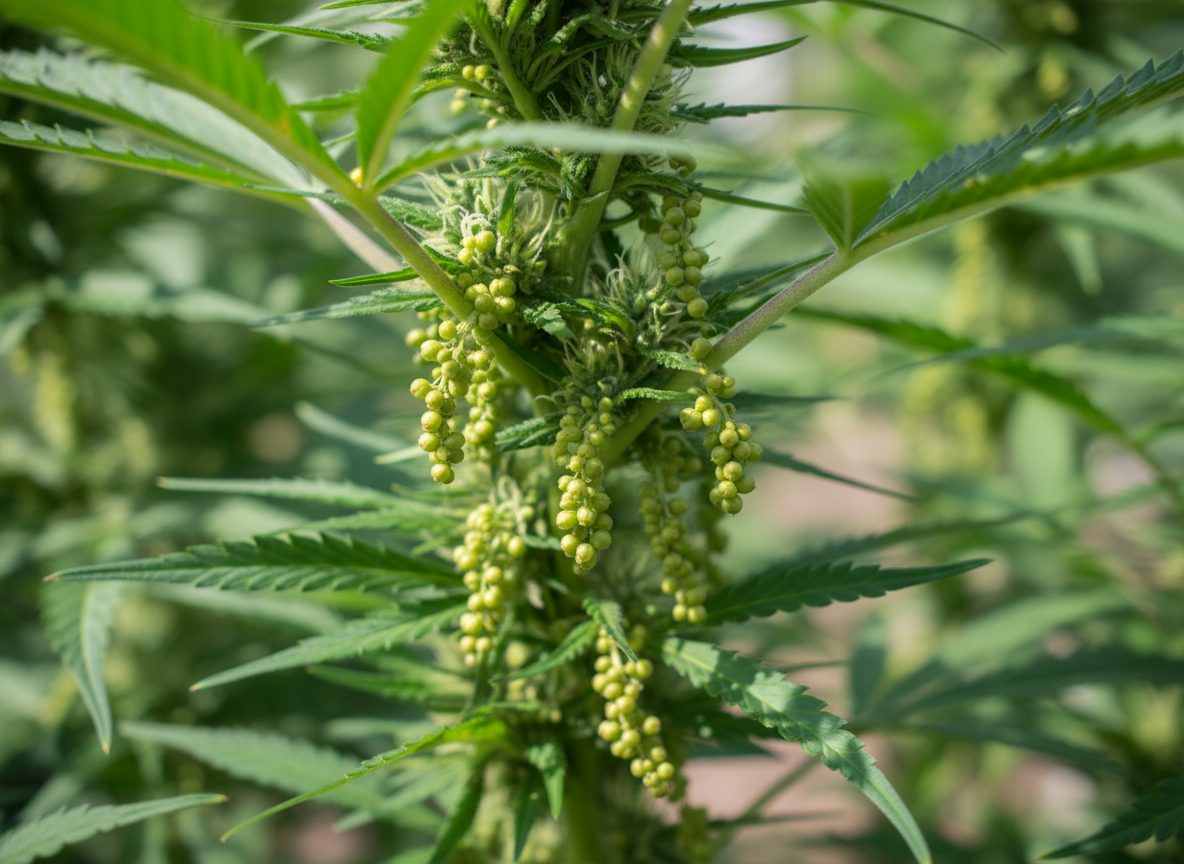
Pollination is the transfer of pollen grains from dehiscent anthers of staminate flowers to receptive stigmas of pistillate flowers, leading to fertilization and achene (seed) formation. Cannabis sativa is anemophilous — wind-pollinated: lightweight, dry, tricolpate pollen grains (~25 μm) are released in large quantities and can travel 1–10 km or more under favorable wind (Small & Antle 2003; Small 2015). Pollinated female flowers rapidly arrest trichome development, divert resources to seed maturation, and exhibit marked declines in cannabinoid and terpene content — reductions of 30–60% in THC have been reported relative to unpollinated sinsemilla controls (Small 2015; Meier & Mediavilla 1998). Because of this, drug-type cultivation is rigorously isolated from pollen sources; feral hemp within several kilometers of a CBD or cannabis operation is a documented contamination risk (Small & Antle 2003). Etymology: Latin pollen ("fine flour, dust") + -ation. Synonyms: fertilization (loose usage), seed-setting, "pollen chuck." → See also: Male plant, Female plant, Seed, Sinsemilla, Pistil.