Legalization
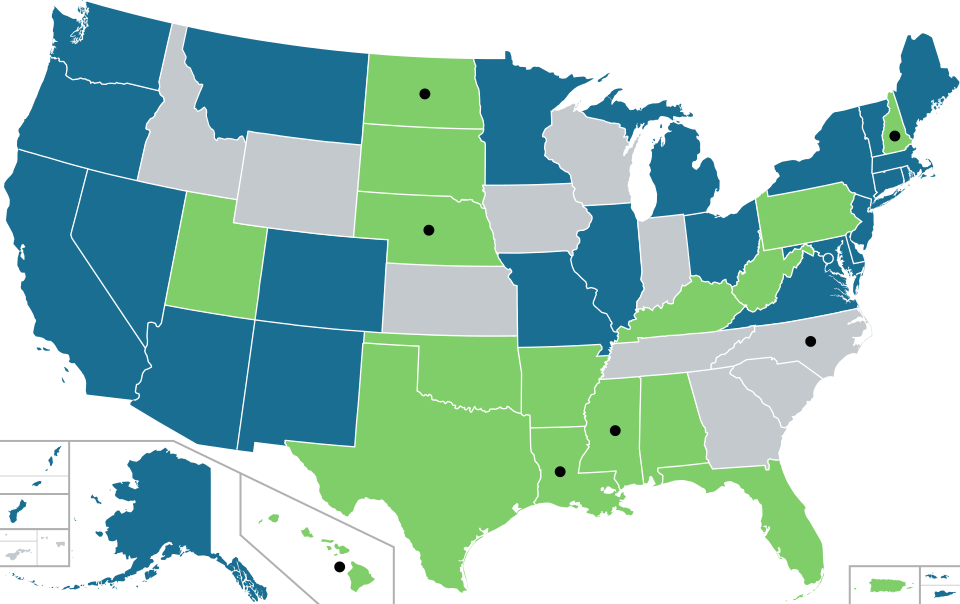
Legalization is the affirmative authorization of specified cannabis conduct — typically possession, personal use, and (in most cases) a regulated commercial market — for adults meeting statutory criteria. Legalization removes both civil and criminal penalties within defined limits (possession caps, age 21+, no public consumption) and establishes a licensing regime for commercial activity. It is distinct from decriminalization, which merely reduces penalties without authorizing conduct. As of April 2026, 24 states and the District of Columbia have legalized adult-use cannabis: Alaska, Arizona, California, Colorado, Connecticut, Delaware, Illinois, Maine, Maryland, Massachusetts, Michigan, Minnesota, Missouri, Montana, Nevada, New Jersey, New Mexico, New York, Ohio, Oregon, Rhode Island, Vermont, Virginia (possession/home grow only; retail delayed to July 2027 under Gov. Spanberger's April 2026 amendments), Washington, and D.C. (no retail). Hawaii enacted a low-dose adult-use framework in 2025, still pre-retail as of April 2026. Cannabis remains federally illegal under the CSA regardless of state legalization; state-legal activity survives federally only through enforcement discretion and the annual Joyce-Blumenauer appropriations rider (medical only). *→ See also: Adult-use, Medical cannabis, Decriminalization, → see also [Part 7]: Licensee