
Outdoor
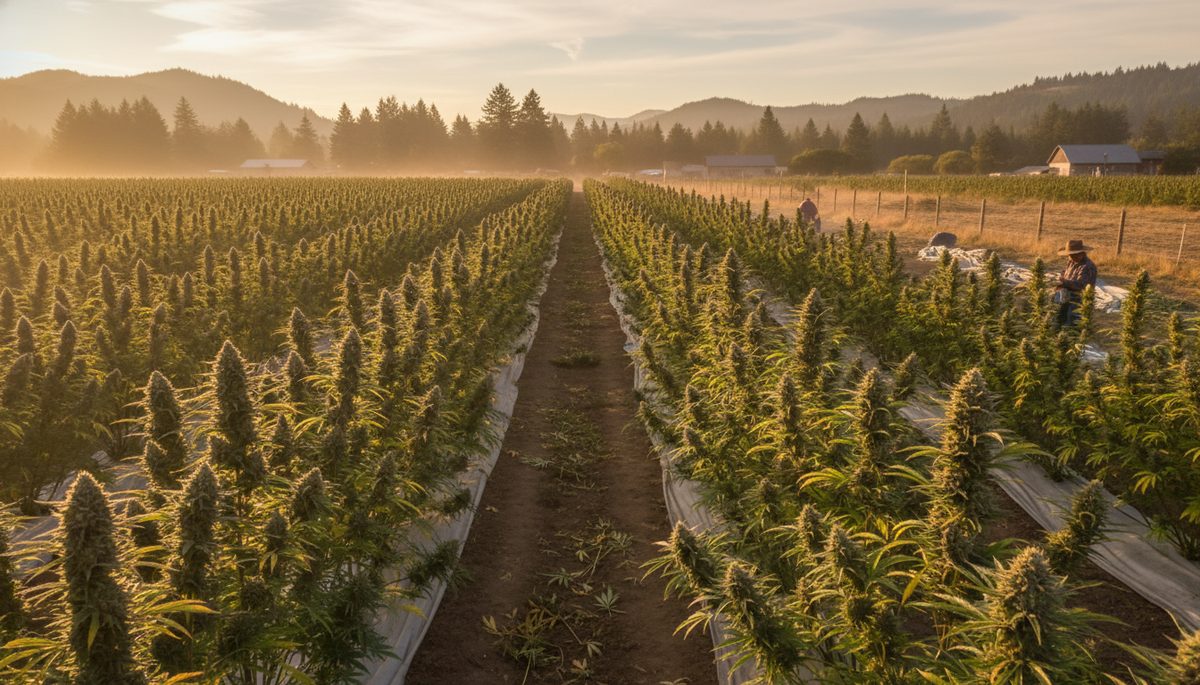
Outdoor cultivation refers to field-grown cannabis produced under ambient solar radiation and natural photoperiod, without enclosing structures. Because drug-type Cannabis sativa is predominantly a short-day (photoperiod-sensitive) species, outdoor flowering is initiated naturally as day length falls below the critical photoperiod (~13–14 h), typically mid- to late-summer in temperate Northern Hemisphere latitudes, with harvest from September to November (Chandra et al. 2017; Backer et al. 2019). Outdoor production has the lowest energy and capital cost per gram and the smallest carbon footprint, but is constrained to a single annual harvest and exposed to pathogens (notably Botrytis cinerea), pests, and weather. Proponents invoke terroir — the concept borrowed from viticulture that regionally specific soil, climate, and microbial communities impart characteristic phytochemical signatures — as justification for outdoor-grown, sun-grown designations. Auto-flowering (day-neutral) cultivars can yield multiple outdoor harvests per season at appropriate latitudes. Etymology: Middle English utdor. Synonyms/slang: sungrown, full-term, field-grown. → See also: Indoor, Greenhouse, Soil, Harvest.