
Potency testing
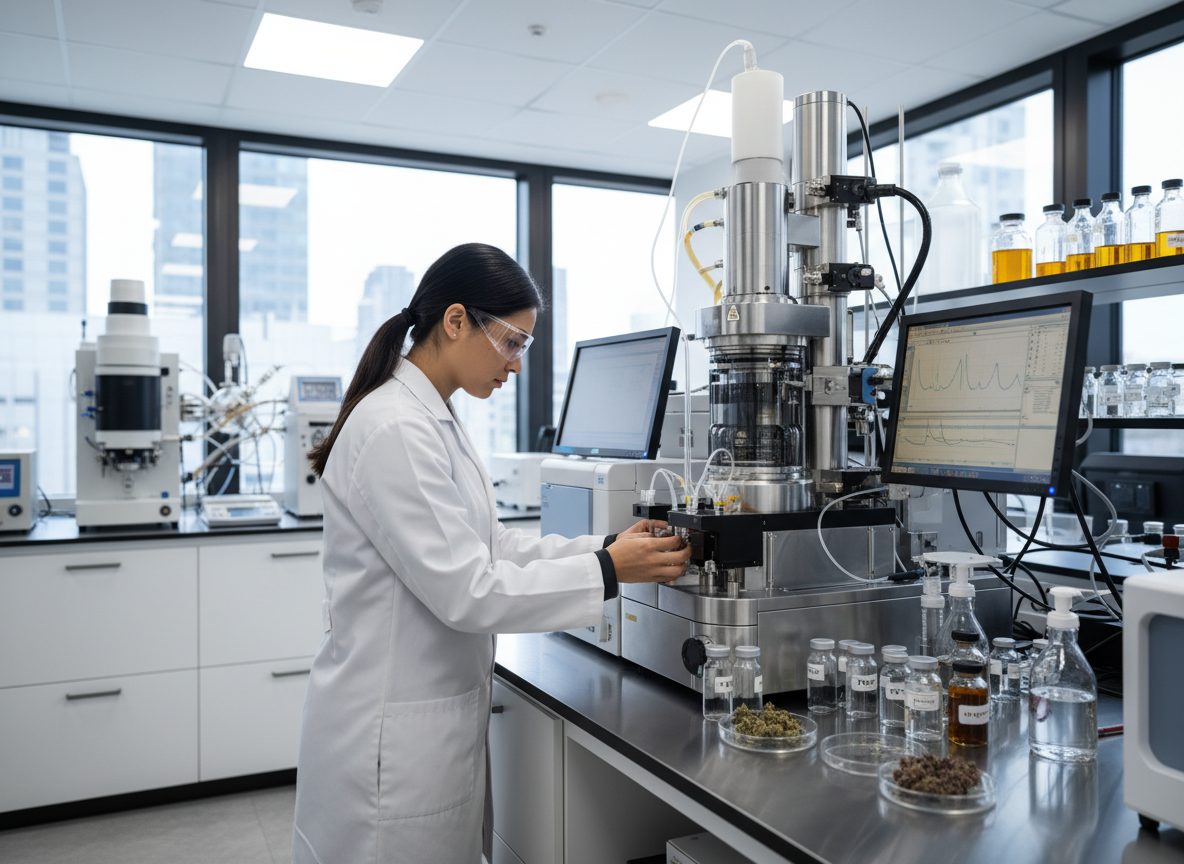
Potency testing quantifies cannabinoid concentrations in cannabis products — principally Δ9-THC, THCA, CBD, and CBDA, plus minor cannabinoids including CBG, CBGA, CBN, CBC, THCV, and Δ8-THC. Results are expressed as percent-by-mass for flower and concentrates, or milligrams per serving/package for edibles. The standard method is High-Performance Liquid Chromatography (HPLC) with photodiode array or UV detection, preferred over gas chromatography because HPLC operates at room temperature and preserves acidic precursors (THCA, CBDA). California mandated a standardized cannabinoids test method effective January 1, 2024. Total THC is calculated as (THCA × 0.877) + Δ9-THC, accounting for CO₂ loss during decarboxylation. ⚠️ "THC inflation" is a documented, disputed phenomenon: peer-reviewed studies (Schwabe et al., PLOS ONE 2023; a 2025 Scientific Reports study of 277 Colorado products) found 40–70% of flower samples fell outside a ±15% accuracy threshold, nearly always over-labeled. Drivers include "lab shopping," price premiums for high-THC flower, and inconsistent sample prep. New York OCM requires adult-use products to test within ±15% of labeled THC, medical within ±10%. → See also: Testing lab, COA, Compliance