
Sublingual
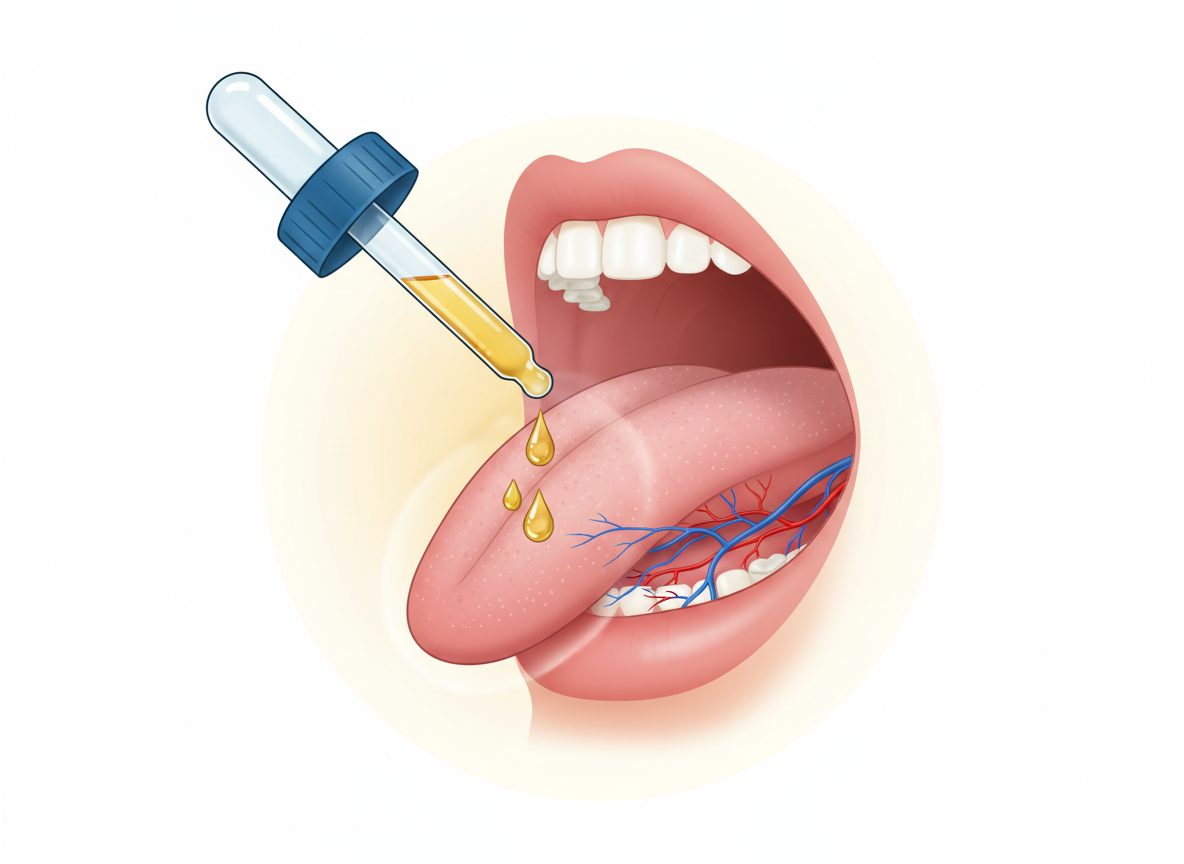
⚠️ Term with overstated marketing claims. Sublingual describes a route of administration in which a drug is placed under the tongue (in the sublingual sulcus) or against the cheek (buccal) for absorption across the thin, vascularized oral mucosa directly into systemic venous return, partially bypassing hepatic first-pass metabolism. Cannabis formats include tinctures, metered sprays, dissolvable strips, lozenges, troches, and fast-melt tablets. In theory, sublingual absorption should reduce the 11-hydroxy-THC metabolite fraction and shorten onset. In practice, published pharmacokinetic data for the nabiximols oromucosal spray show a 11-OH-THC to THC ratio similar to oral ingestion, and sublingual THC bioavailability is only marginally higher than swallowed oral (roughly 13% versus 4–12%). The discrepancy arises because cannabinoids are extremely lipophilic (log P 6–7), poorly water-soluble, and the oral mucosa provides limited residence time and surface area; a large fraction of any sublingual dose is ultimately swallowed. Real-world onset is typically 15–45 minutes, faster than swallowed edibles but slower than inhalation. Marketing claims of "bypassing the liver" and bioavailability figures in the 70–95% range are not supported by peer-reviewed human data. → See also: Tincture, onset and bioavailability (Part 5). ---