
Patch
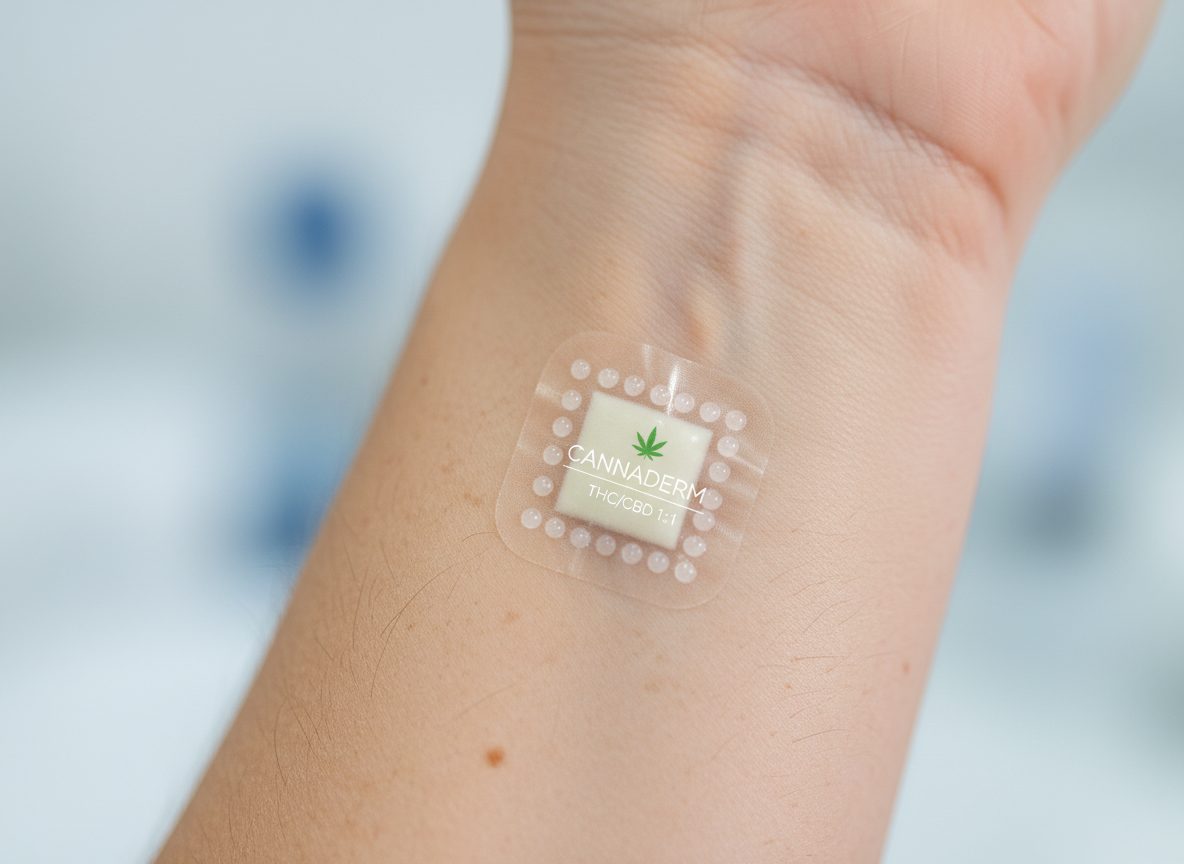
⚠️ Category with frequent conflation between topical and transdermal claims. A patch is an adhesive cannabis delivery system applied to skin for sustained release. Two functionally distinct subcategories are routinely marketed under the same name: a topical patch delivers cannabinoids to local skin and superficial tissue with no systemic absorption claim, essentially functioning as a balm on an adhesive; a true transdermal patch is engineered with permeation enhancers and designed for sustained systemic plasma concentrations, analogous to FDA-approved scopolamine, nicotine, and fentanyl patches. Patch architectures follow three archetypes familiar from pharmaceutical transdermal products: reservoir (liquid or gel drug chamber with a rate-controlling membrane), drug-in-matrix (drug dissolved in a polymer layer), and drug-in-adhesive (drug incorporated into the adhesive itself). Cannabis patches commonly advertise 8–12 hour wear times and specific cannabinoid profiles (THC, CBD, CBN, CBG, THCA). The critical caveat: peer-reviewed human pharmacokinetic data for commercial cannabis patches is scarce to nonexistent. Most published cannabinoid-patch research consists of in-vitro skin-flux studies or animal models. A product labeled "patch" does not, on its own, guarantee verified systemic delivery. → See also: Transdermal, Topical. ---